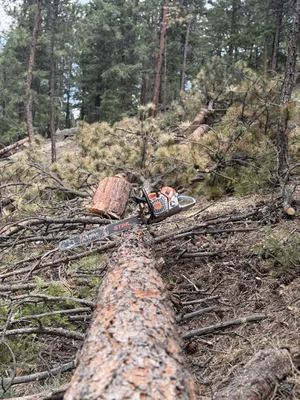
Some thoughts on hard work, strange careers, and finding a place in the woods.
October 18, 2026
I've made a living doing some pretty strange things. Hauled lobster traps out of the Atlantic, fished
commercially in Alaska, walked steel high above the ground, chased wildfires around the mountains, and now I
spend my days with a chainsaw in the timber. Some of those jobs scared the hell out of me. Most beat me up
pretty good. I loved them anyway. Well, most days.
When I first went fishing, I wasn't thinking about feeding the world. I was thinking about making it through the
day without doing something stupid. The ocean has a way of making you grow up. It doesn't care how tired you
are, and neither does the gear. Eventually I realized that what we hauled aboard ended up on dinner tables all
over the world. People we'd never meet were eating food we'd caught. That was a pretty wild thought. Then I
learned how many people had serious problems with commercial fishing. Overfishing, bycatch, damage to
ecosystems. Some criticisms made sense. Some were more complicated. Funny thing, being proud of a job and
discovering that someone else sees it entirely differently.
Ironworking was another education, with considerably less water and a whole lot more empty air under my
boots. I loved being a connector. Walking the steel, calling cranes on the radio, learning the rigging, wrestling
beams into place, putting bolts in, talking shit with the guys. I was afraid of heights when I started. You don't
exactly cure that by reading a pamphlet.
We helped build the Legacy Building at the National Western Stock Show. One day we were up there
connecting steel, including a beam with a Christmas tree on it and a white beam signed by the people who'd
sponsored the building. Another connector and I got talking about how we'd probably never see the place
finished. We'd put up the bones, then move along. Well, I did get to walk through it later. It was incredible.
Nobody knew me from Adam. Just another guy wandering around a beautiful building. But I'd been up there,
putting those bolts in. I knew. That was enough.
Then came wildland firefighting. Steep hikes with heavy packs, cutting and digging line, long days, great
crews, and friendships I wouldn't trade for much. We saw some big fires. Watched whole hillsides go up.
Watched people's places burn. And I have to say, I never felt much like a hero. Sometimes we worked like dogs.
Sometimes we sat in a truck waiting for instructions. Sometimes the best thing we could do was back off and
watch fire eat a mountain from the opposite ridge. That helpless feeling stuck with me.
It got me wondering about the work that happens before a fire. Why were some stands so thick? What did
drought do to a tree already fighting its neighbors for water? What about beetles, dead limbs, ladder fuels, all
the stuff sitting there waiting for the wrong day? I started learning about forest management, and suddenly a
chainsaw wasn't just a tool for getting a tree on the ground. It could be part of giving a home, or a patch of
forest, a better chance. Not a guarantee. Fire doesn't offer those. But a chance.
And wouldn't you know it, forestry has its own arguments. Cutting trees can help a forest or hurt it. A dead tree
might be a hazard beside a house and a perfectly good home for wildlife farther out. Mitigation costs real
money, and I understand why a homeowner might look at an estimate and decide to take their chances.Meanwhile insurance companies are looking at entire communities and doing their own math. Nobody's got a
simple answer for all of it, least of all me.
It's odd, really. I've worked in industries that feed people, build places, fight fires, and try to make forests
healthier. Every one of them has people who love the work and people who question it. Maybe that's how it
ought to be. Loving what you do shouldn't mean refusing to look at what it costs, or what it changes.
These days my favorite part is often the first few minutes of the morning. Truck parked. Cold air. Saws laid out,
chains checked, tools where I can find them. Aspen leaves falling through the trees like harpstrings. Then I fire
up a saw and ruin the whole peaceful scene.
I still get sore. Things still break. There are days a chair and a paycheck sound mighty appealing. But after the
ocean, the steel, and the firelines, I've never felt more at home than I do here. A truck, a chainsaw, some hard
work ahead, and the chance to build something I'm proud of. Not a bad way to earn a living.
Chris
Owner-Operator
White Elk Forestry, LLC
Website: whiteelkforestry.com
Phone: (207) 441-8299
Email: chris@whiteelkforestry.com